IT Training
PTR Ethos & Pathway for Microsoft Fabric Training
Adoption doesn't just fail from a skills gap, it fails when the people who understand the business process, the people who understand the systems, and the people who understand the data architecture never actually talk to each other.

There's a quiet assumption behind a lot of technology rollouts: that training means a single event. A workshop, a webinar, maybe a slide deck emailed round afterwards and job done. It's an assumption that quietly guarantees the “toolbox nobody's been shown how to use” problem we've written about elsewhere, because real confidence with a new platform was never going to come from one session, however good it was.
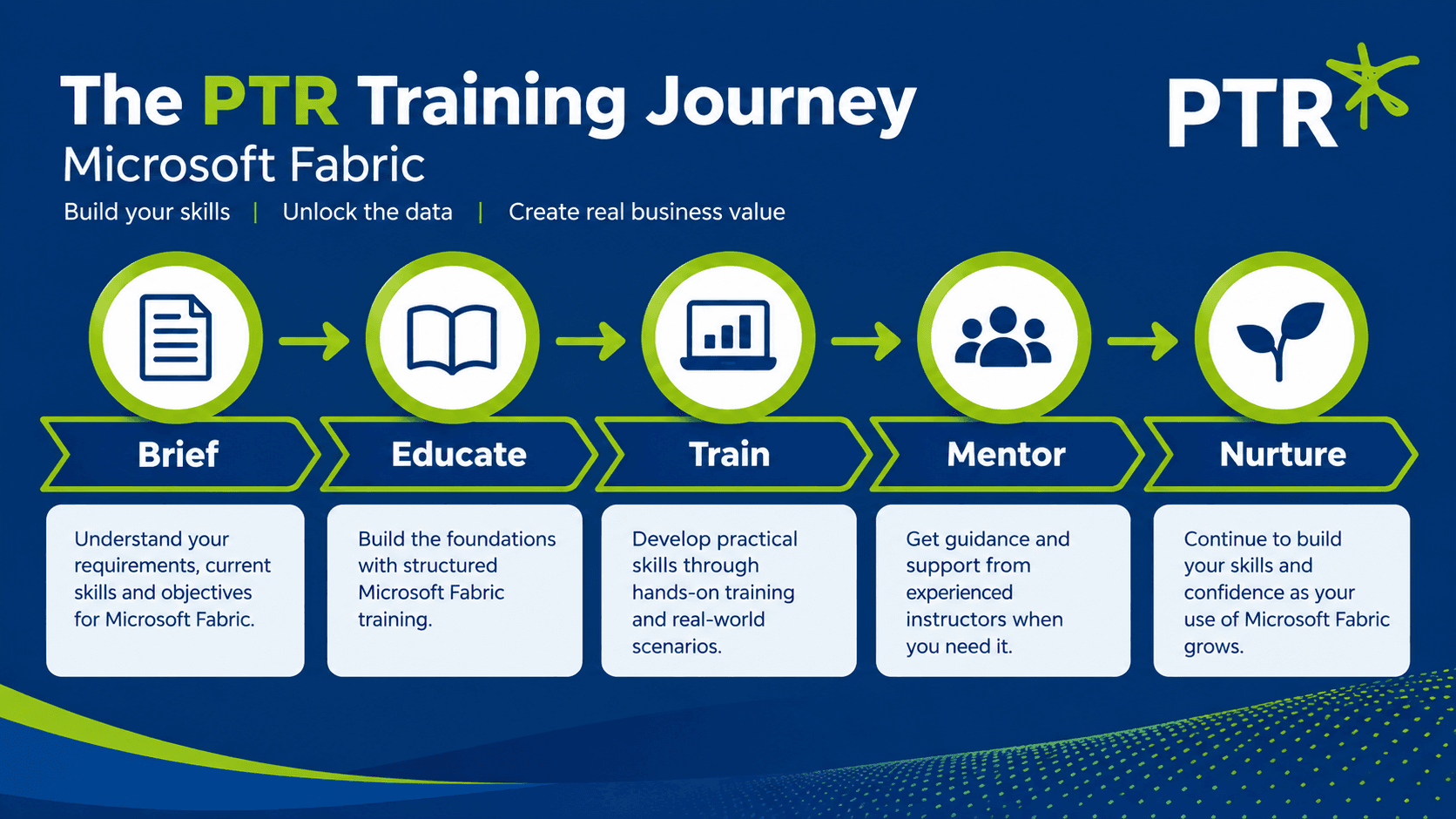
At PTR, training has never worked that way. For over 35 years, as a family business built on repeat custom from satisfied clients, our approach has been built around a simple idea: brief, educate, train, mentor, nurture. Five stages, not one, because adoption is a relationship, not a transaction.
A Pathway, Not a Milestone
A Fabric rollout succeeds or stalls on three things working together:
- how confidently people use their data day to day,
- how well the underlying reports and pipelines are actually designed
- how willingly people adopt the new way of working in the first place.
Chase only one of these, say, technical build quality, and you can end up with a beautifully engineered platform that nobody trusts or uses. Our Fabric training pathway is built to develop all three together:
- improving data-literacy
- raising design and build quality
- building genuine user adoption, rather than treating any one of them as “someone else's job.”
Speaking to the Room You're Actually In
One of the most common training mistakes is treating a whole organisation as a single audience.
- A leadership team needs to understand why Fabric matters strategically and what the investment case looks like, not the mechanics of a semantic model.
- A report consumer needs the confidence to read a dashboard and trust it, not a lecture on data governance policy.
- A data engineer needs architecture and pipeline design, not a slide about “digital transformation.”
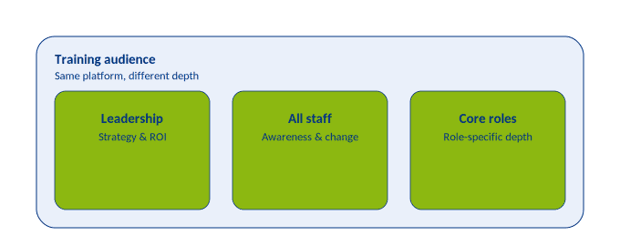
We tailor content by audience rather than diluting one deck for everyone: separate leadership briefings, all-staff awareness sessions, and deep, role-specific training tracks for report consumers, report creators, data engineers, data stewards, governance officers and platform administrators. Each gets the depth and language that's actually useful to them, which is also why it lands, nobody sits through forty minutes of content meant for someone else's job.
Fusion Teams: Getting the Right People Talking to Each Other
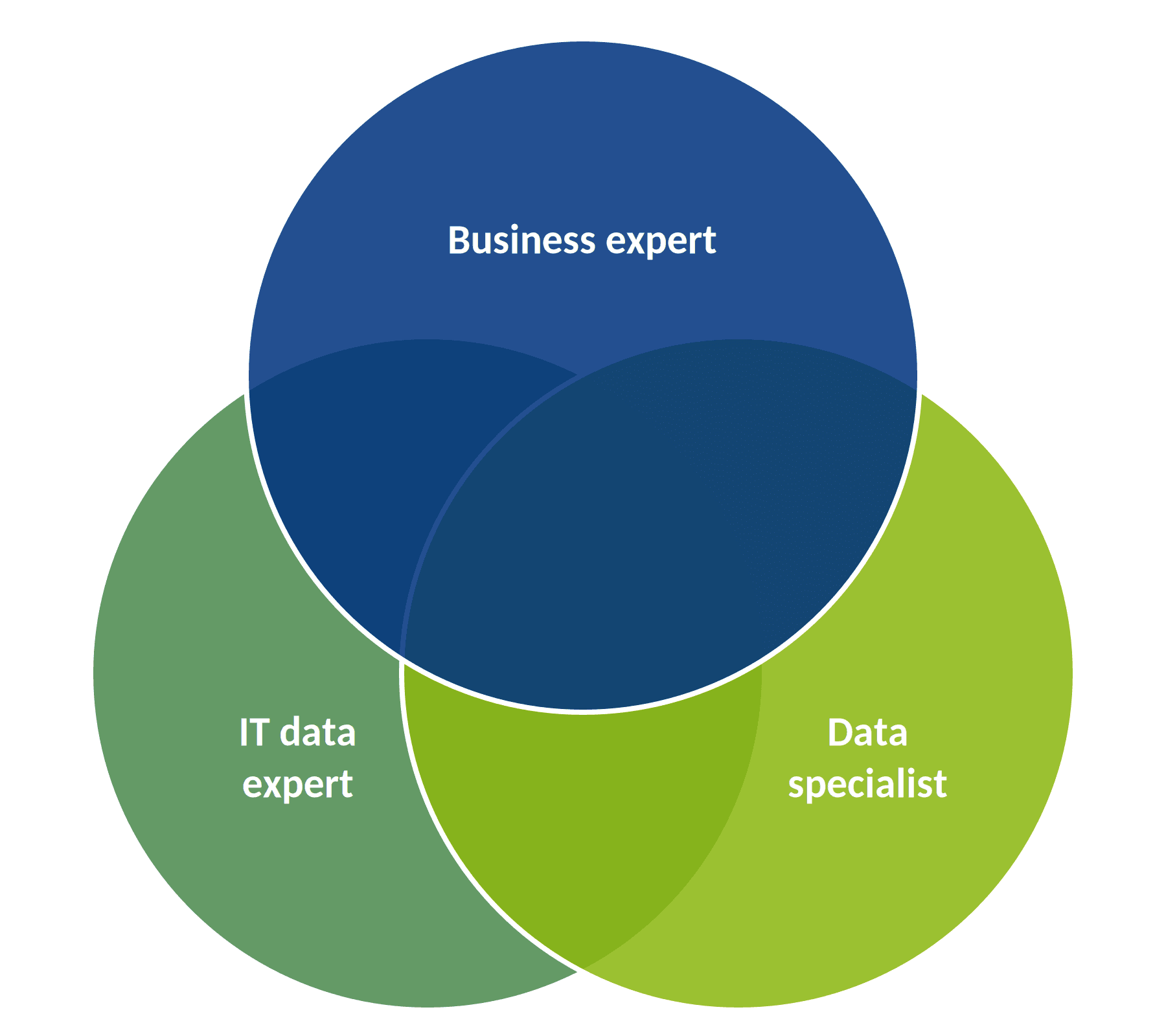
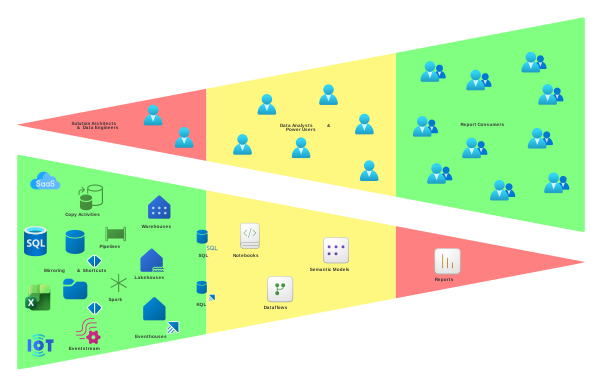
Adoption doesn't just fail from a skills gap, it fails when the people who understand the business process, the people who understand the systems, and the people who understand the data architecture never actually talk to each other. We build training around cross-functional “fusion teams” - a business expert, an IT specialist, and a data specialist working through the same material together, for the same business area.
That shared understanding, built early, is often what prevents the ownership disputes and “whose number is right” arguments that derail projects long after the technology itself was never the problem.
Matching the Format to the Moment
Not every stage of adoption calls for the same kind of training, and we don't force one.
Awareness and briefing works best as something scalable:
- bite-size videos
- e-learning
- webinars
Training sessions that reach everyone quickly without pulling them out of their day.
Role-based skill-building needs something more hands-on:
- face-to-face or virtual workshops
- small groups
- real Q&A
Technical, engineering-heavy topics need proper depth:
- instructor-led deep dives
- reinforced afterwards with self-paced e-learning.
And once people are up and running, ongoing user groups and clinics keep confidence building, rather than letting it quietly fade the moment the project team moves on to the next thing.
Standard, Tailored, or Bespoke - Built Around What You Actually Have
Some organisations need a proven, ready-made course. Others need something tailored from existing modules to fit their specific rollout. And some need training built entirely around their own systems, their own data, and their own business language, because a generic Fabric course means nothing to a report creator who just needs to know how their data model works.
We offer all three, and we help you work out which one you actually need, rather than defaulting everyone to the same package. Our standard course offerings can be found here, but we have a vast library of training modules for custom pathways.
Why This Matters More Than the Technology Itself
None of this is really about Fabric. It's about the fact that a platform is only as good as the confidence people have using it, and confidence isn't a feature you switch on, it's something built deliberately, in stages, for the right audience, in the right format, over time.
That's the whole philosophy behind PTR's training: not a single event to tick a box, but a pathway that actually gets your people to the point where they use the platform daily, without a second thought.
If your organisation is approaching a Fabric adoption and wondering how to close the gap between “we bought the platform” and “our people actually use it,” that's exactly the conversation we'd like to have. Get in touch at info@ptr.co.uk or here.
MD
Mandy Doward
Managing Director
PTR’s owner and Managing Director is a Microsoft certified Business Intelligence (BI) Consultant, with over 35 years of experience working with data analytics and BI.
Frequently Asked Questions
Couldn’t find the answer you were looking for? Feel free to reach out to us! Our team of experts is here to help.
Contact Us