
Power BI
Why Your Business Doesn't Trust Power BI (And It's Not Power BI's Fault)
I was talking to one of our partners this week about Power BI adoption and they said something that's stuck with me. Despite a lot of hard work by their team, their users don't trust Power BI.

Why Your Business Doesn't Trust Power BI (And It's Not Power BI's Fault)
I was talking to one of our partners this week about Power BI adoption and they said something that's stuck with me. Despite a lot of hard work by their team, their users don't trust Power BI.
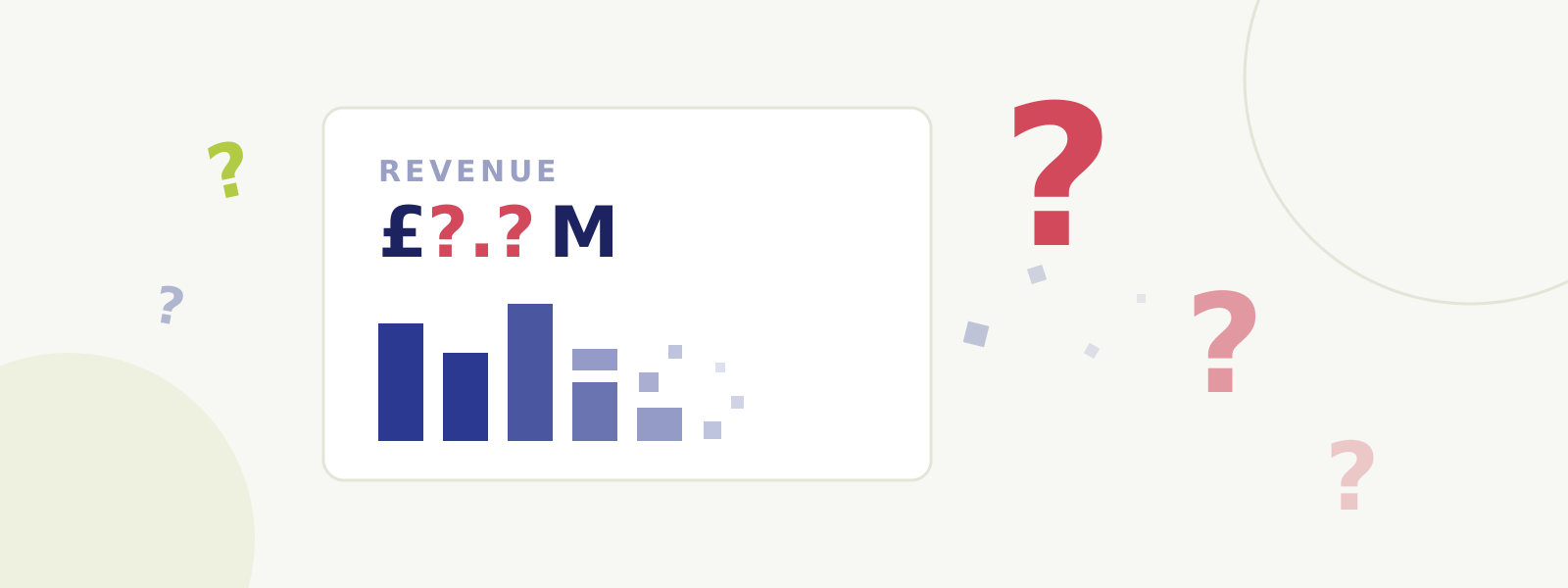
Not because the visuals are wrong, or because it's slow. Because the numbers don't match.
When we started digging deeper into the issue the real problem quickly emerged. Multiple users had been pulling the same underlying data and building their own datasets on top of it. Each user applying their own logic for how a metric should be calculated. Revenue calculated one way in the Sales Team report, a slightly different way in the Accounting Team report. Same source data, different answers. Neither wrong exactly, just two different ways of looking at their data.
That's not a Power BI problem. That's a single source of truth problem.
The cost of competing "truths"
When two reports show two different numbers for the same metric, the business doesn't ask "which calculation methodology is correct?", they ask "can I trust any of this?". Confidence, once lost across an organisation, is expensive to win back and it's rarely won back by better visuals. It's won back by strong data governance and control.
This is a pattern we see constantly. Power BI gets rolled out, adoption is strong early on because it's easy to build with and then usage quietly fragments. Users start self-serving with their own datasets because it's faster than requesting a change to a central model. Within a few months you don't have one Power BI environment, you have a dozen unofficial ones, each a slightly different version of the truth.
What a single source of truth actually requires
A single certified Semantic Model, sometimes per business area, is the foundation of a trusted Power BI environment. Getting there isn't a tooling decision, it's a governance decision. A few things need to be true:
- Certified Semantic Models - owned by a named team, not "whoever built it first."
- Business logic defined once, centrally - revenue, churn, margin, whatever your core metrics are, not recalculated ad-hoc in every report.
- A clear distinction between certified and personal content - Power BI supports this natively (certified/promoted datasets, workspace governance), but it only works if the organisation actually enforces it rather than leaving it as a technical option nobody uses.
- A defined path for change requests - If users go around the central model because raising a change takes three weeks, they'll keep going around it. The self-service urge isn't the problem the lack of a fast, trusted route into the governed model is.
None of this is exotic. It's discipline, ownership and a bit of friction removal. But, most importantly, it's the difference between Power BI being trusted infrastructure and Power BI being "that tool where the numbers don't match."
Where to start
As I told our partner, the fix usually isn't "rebuild everything in Fabric" or "buy more licences." It's stepping back and asking: where does our business-approved version of the truth actually live, where should it live and does everyone know it's there?
That's exactly the gap our Data Strategy Review is built to close, assessing where competing data sources have crept in and setting out a practical path to a single, governed model your business actually trusts. From there, our Power BI Consultancy work focuses on turning that strategy into a real, certified semantic layer your teams build from not around.
WD
Will Doward-Jones
Business Intelligence Consultant
Will specialises in Microsoft Fabric & Azure solutions, with a career built around one consistent thread: using data to drive better decisions.

Frequently Asked Questions
Couldn’t find the answer you were looking for? Feel free to reach out to us! Our team of experts is here to help.
Contact Us